Just so you know, I’m not sharing this from the standpoint of someone on top of the mountain who overcame this feeling with a one-time solution. Writing when burnt out isn’t a thing you fix with a productivity trick or a better morning routine. I wish, but all I can offer is my clarity and reflection, and maybe they apply to you too, and hopefully they’ll help. Even better, you might not even need my help at all. You might already know what to do, you’re just too tired to do it, and I get that.
I’m a cyclical person. No matter how much I try, I go from hyperfocus and high energy to feeling completely sapped, and this happens in seasons. In fact, now that I think about it, I fall off the wagon around January almost every year, which also happens to coincide with being super motivated to write and show up for my projects and client work in the months of October through December. I’m a freelance writer with a blog and book projects, but I end up having periods where I can’t even think straight because my body won’t let me. I didn’t plan for it, but I burn out and flatline by January every single time.
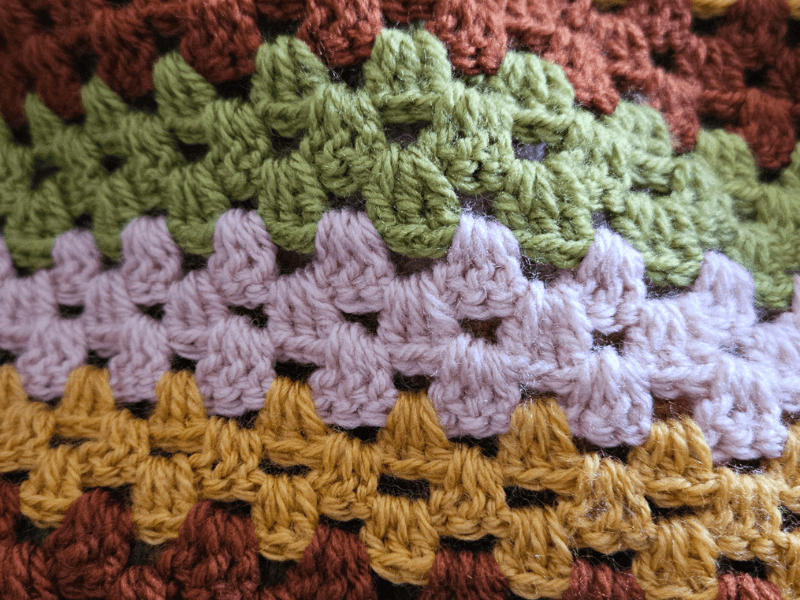
So this year, January was the darkest point, because a lot of things happened at once. There was this bad timing that threw me into a place of fear and uncertainty and catastrophe, and I wasn’t able to sleep, or function, or work. My brain froze, my body felt under attack, and all I could do was something low effort and repetitive. I picked up crochet, my latest big addiction, and I learned enough that I could do double crochet stitches repetitively without thinking about numbers or patterns, and listen to low-stakes audiobooks, and hope for the best. I listened to 10 books during January and February. I picked grass on my forgotten Animal Crossing island. I did the bare minimum work I could do, and then I did this, over and over.
On top of everything, our country got hit by six or seven storms back to back, and we had to stay indoors most of the time with barely any sun. There was devastation in some parts of the country.
A bad day looked like me waking up and rotting on the couch all day, crocheting with an audiobook on and the curtains closed. At night I played a bit with online friends, but I was carrying a lot. I can’t say I was sad, or angry, or dull. I was just permanently tired, sleeping terribly, not getting enough rest. It was a soul void situation, and I didn’t necessarily need anything specific. Constant terrible weather didn’t help, and I felt like I was stuck in a loop.
The problem with burnout, boundaries, and limitations is that they’re not neon-lit and blinking and trackable in real time. They stack silently. “Oh, I’m so passionate about this project, I can work on it without sleep for a week.” I feel that insane drive to write and show up and give my best, and then I wonder why my nose is runny every other week. And during this low phase, picking up a pen felt heavier than the world.
What I Actually Did (Not What Productivity Culture Tells You to Do)
I didn’t push through it, and I want to be honest about that. I told myself: okay, I’ll park and archive all my personal projects for now, no pressure. And taking that pressure off my back gave a lot more space for recovery. Whatever planning system I had fell off during that phase, and I registered that as data, because the absence of information is information too. I logged it as a “no fucks given day,” which is pretty self-explanatory.
I stayed away from social media because I found it especially hard having to perform for an audience when I wanted to be honest with myself and allow myself to feel whatever I was feeling, without pretending. So I stopped pretending, and I disappeared. I let myself rest, and I tried to make my environment feel safe, even though it wasn’t always easy, and chores piled up, and my energy was limited.
I got better when I finally talked to someone, and they were a lot calmer and cooler about everything than I was. When I said what I was feeling out loud, why everything felt like doom, they were very understanding and supportive, and that cracked something open.
The Stitch That Changed Everything
One thing that encouraged me to get back to writing was, of all things, crochet.
Crochet is a craft where it’s a lot easier to see progress than in writing, at least for me. Word count isn’t as obvious, because 200,000 words doesn’t mean you have a publishable book. But 200,000 stitches is a shawl you can wrap around yourself. And crochet taught me something I desperately needed to hear: focus on the current stitch and trust the process. When you look up, the shawl is done. You don’t finish a shawl by staring at how far you still have to go, you finish it by doing the next stitch. So I did the same thing with my writing.
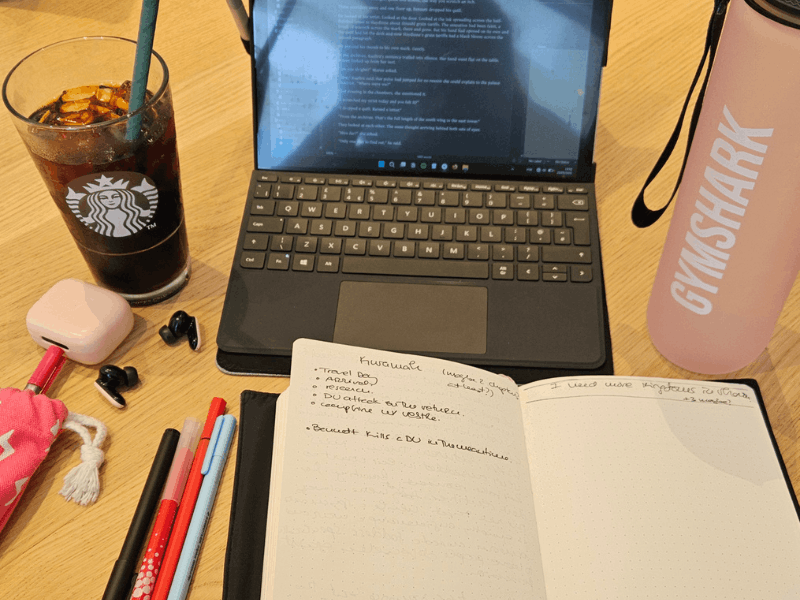
I started rebuilding in February, slowly. I picked up a project I already had an idea for, something with a plot I’d already outlined, so I didn’t need creative energy I didn’t have. I just needed to show up. I committed to 30 minutes a day, mandatory, first thing in the morning before anything else could eat my energy, and I started waking up earlier to make room for it. (If you want the actual tools I lean on when writing feels impossible, I wrote about those here.)
I started writing on February 23rd, and I finished the first draft of Blood Oath on day 39 of the streak. 39 days, after months of nothing. Until the habit stuck, and I didn’t have to do it all at the same time, or the same place.
What I Know Now
Writing is a lot of things at the same time. Escapism, yes, but also metabolizing symbolically what I was dealing with in real life, and it’s work, and it’s fantasy, and it’s reflecting. A lot of it is self-reflection. I find it hard to take writing apart from mental health, from psychology, from how I process the world, because for me it’s all the same thing, or at least connected so deeply that I can’t pull them apart.
Honestly, writing came after the bad days, and I haven’t had bad days since I started writing again. Maybe that’s related. I’m a creator by nature, and as long as I create and regulate my body, I’m good, and that’s what I’ve been doing. Maybe it’s not great marketing, but it’s true.
The only reason I hadn’t published anything before was because I didn’t prioritize it. And then I did, and I saw the results.
I’m not going to tell you it’s easy, or that you just need discipline, or that you should push through the wall. What actually worked for me was this: I stopped fighting the cycle, I let myself hibernate, I did something with my hands that wasn’t writing, I removed every piece of pressure I could find, and when my body was ready, I showed up for 30 minutes. Then I did it again the next day. And the next.
If you’re in the tired phase right now, reading this from under a blanket or between tasks you can barely get through, here’s what I want you to know: you’re enough. You might just be a bear writer, like me. And bears come back.
If this landed somewhere tender, I send letters like this one to people who get it. You can subscribe here.